
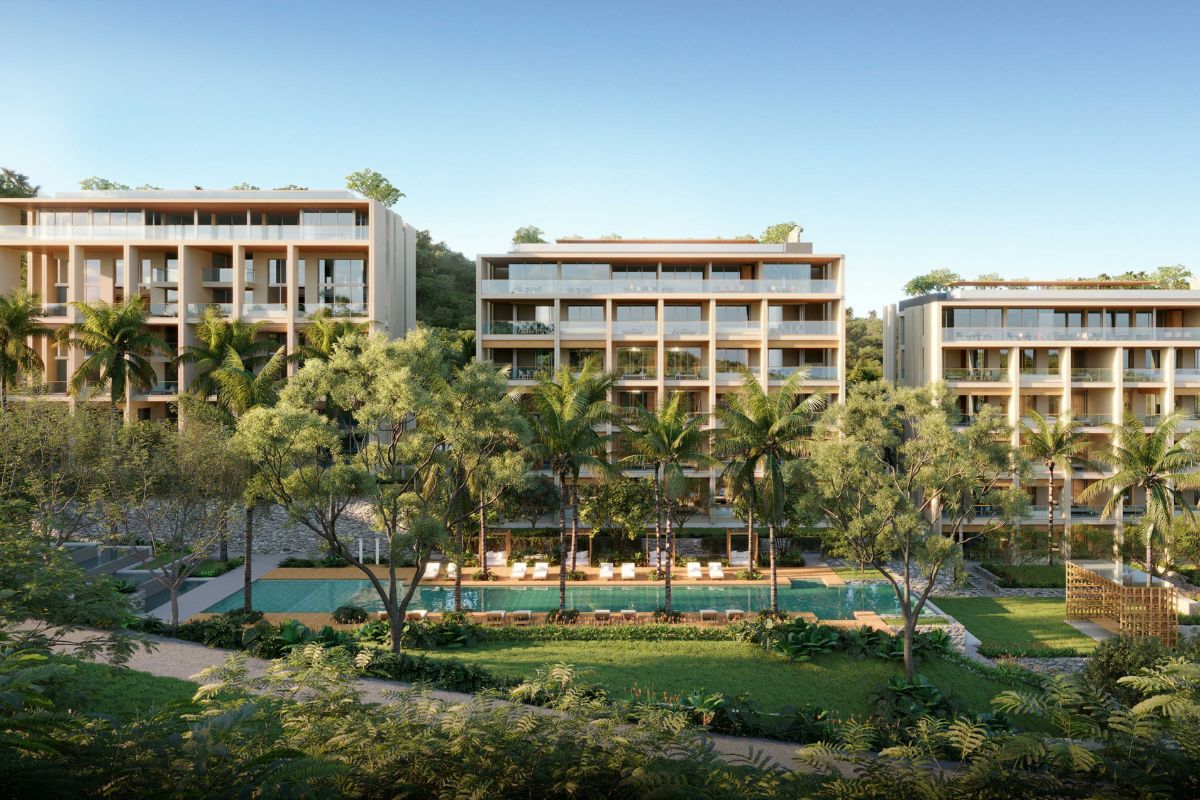
Phuket 2026: Asia's Leading Resort Branded Residences
Phuket Now Leads Asia's Resort Branded Residence Market. Here Is What That Gives Back to the Island.
Thailand holds the largest launched branded residence supply in Asia, and Phuket sits at the head of the resort segment. The interesting part is not the ranking. It is what a brand-led market builds on the island once the sales gallery closes.
TL;DR
Phuket now leads Asia's resort branded residence segment by unit count, with 3,465 units, according to C9 Hotelworks' Asia Branded Residences Market Review 2026.
Thailand as a whole reached THB205.3 billion (USD6.4 billion) across 13,124 launched units, 26 percent of Asia's launched supply, and leads the region's luxury tier with 30 luxury projects.
Global brands are validating the island at the very top. Etro Residences Phuket in Bang Tao achieved THB830,000 per sqm in January 2026, an island record, against a branded condominium average of THB197,745 per sqm.
The real gain for Phuket is structural. Branded projects have to design service, management and asset standards in from day one, which raises the floor on how the island is built and maintained.
Supply is set to moderate to 6,000 to 8,000 new condominium units in 2026 after nearly 25,000 over two years, which points to a healthier, better-absorbed market rather than a race for volume.
Most branded stock is condominium. Phuket's landed branded segment is small and deliberately low-density, which is a quality opportunity rather than a gap.
A ranking Phuket earned rather than inherited
For twenty years Phuket has been described as an emerging destination. In Q2 2026 the description stopped fitting. C9 Hotelworks' Asia Branded Residences Market Review 2026, covering 14 markets across the region, found Thailand had become Asia's largest branded residences market by launched supply, at THB205.3 billion or USD6.4 billion across 13,124 units, up 13.3 percent year on year and equal to 26 percent of the regional total. Total Thai supply stands at 63 properties and 13,947 units, as reported by Hospitality Net.
Within Thailand the pattern is a two-engine one. Bangkok carries 5,031 units as the urban market. Phuket carries 3,465, and that is enough to put the island ahead of every other resort destination in Asia by unit count. The finding was carried across the trade and national press, including TTR Weekly, Asia Property Awards, Travel Daily News Asia and the Bangkok Post.
Thailand also leads the region's luxury tier outright, with 30 luxury-branded projects against Vietnam's 18 and South Korea's 13. C9 Managing Director Bill Barnett described Thailand as a benchmark market and singled out the depth of the luxury pipeline and the range of formats now arriving, in comments carried by TTR Weekly. For an island of roughly 550 square kilometres, holding the leading resort position in a 14-country study is not a small result.
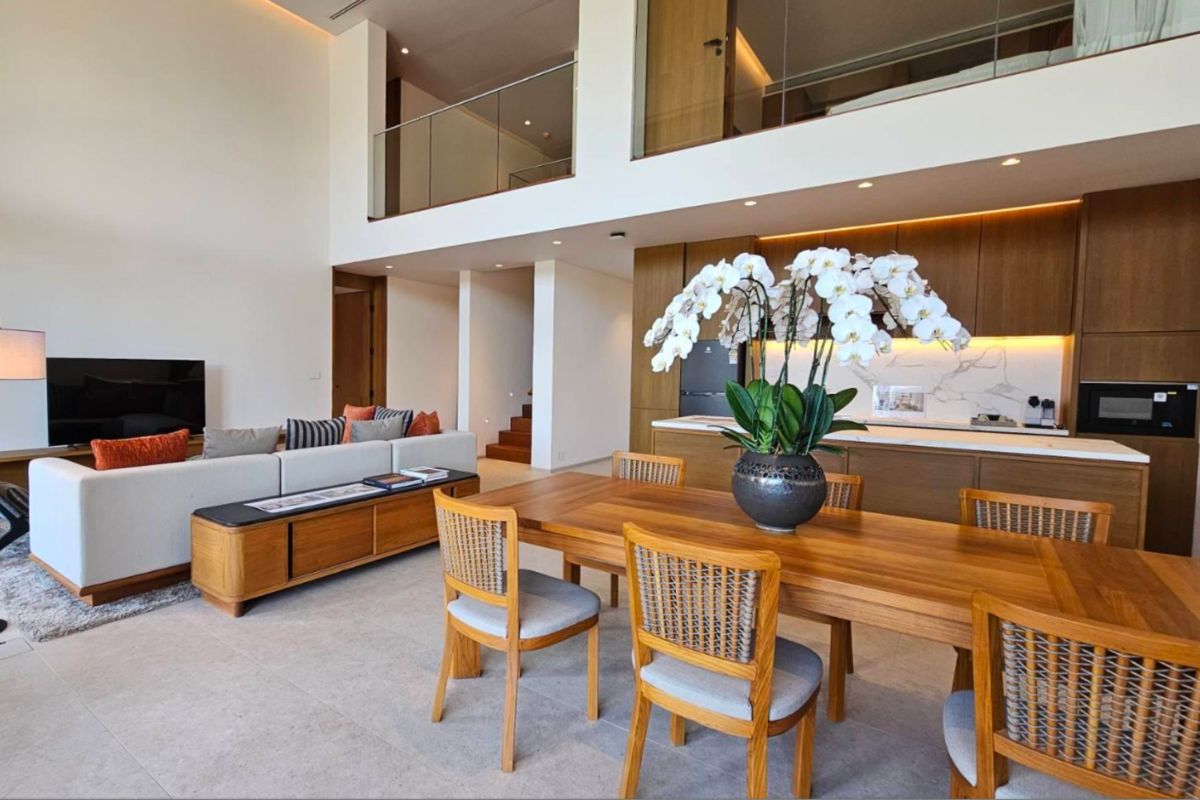
Worth noting: this research was written in Cherng Talay
A detail that rarely gets mentioned. The report that ranked Asia's branded residence markets was produced by a consultancy headquartered on Lagoon Road in Cherng Talay, Thalang, as stated in the review itself. The definitive regional study on this asset class is written from Phuket, about a market that includes Phuket.
That matters more than it sounds. Destinations move up the value chain when they stop being only a place that is sold and start being a place that is analysed, benchmarked and advised from. Phuket now hosts the research, the brand operators, the design studios and the asset managers, not just the beachfront. That is what a maturing property economy looks like from the inside.
What Phuket leads, described precisely
Precision here is a strength, not a caveat. Across Asia, condominiums account for 94 percent of branded residence supply, with landed property at 4 percent and hybrid schemes at 2 percent, per the C9 review. Thailand's own supply splits roughly 70 percent resort and 30 percent urban. So Phuket's 3,465 units are led by branded apartment product, with the branded villa segment still forming.
In the standalone segment, meaning projects not attached to a hotel, C9 counts Phuket at 678 units across eight projects, a pattern the report describes as low-density and boutique. Compare that with Manila, which delivers 1,683 standalone units across just three high-density towers. Phuket is not producing the same product at a smaller scale. It is producing a different, rarer product: fewer units, more land per home, more privacy.
That is the island's natural advantage and it is worth defending. Beachfront land is scarce and getting scarcer, which Colliers Thailand notes is already pushing holiday home developers further inland. Scarcity constrains volume, and constrained volume protects value. Phuket is unlikely to win a branded villa race on unit count, and it does not need to. C9 identifies Koh Samui as the emerging branded villa market by volume, which leaves Phuket free to compete on quality, location and the strength of the operator behind each project.
Global brands are voting with their price lists
In January 2026, Etro Residences Phuket set a new island price record inside the Gardens of Eden development at Bang Tao, achieving THB830,000 per sqm. That is more than four times the island's branded residence average and the highest figure recorded in Phuket. A quarter of the eight residences sold within three days, with three-bedroom homes of 220 sqm transacting at THB182.6 million.
It is the first international fashion-branded residence in Thailand and Etro's first branded residences project in Asia. For context, C9 puts Phuket's branded condominium average at THB197,745 per sqm, rising to THB212,113 across the prime Bang Tao and Kamala district, while Gardens of Eden has now recorded THB4.9 billion in sales, as reported by Asia Property Awards.
Eight residences is a small sample, and one record does not reprice an island. What it does prove is that a European heritage house was willing to attach its name to Bang Tao before attaching it to anywhere else in Asia, and that buyers followed within seventy two hours. Brand confidence of that kind tends to arrive before the rest of the market, not after it.
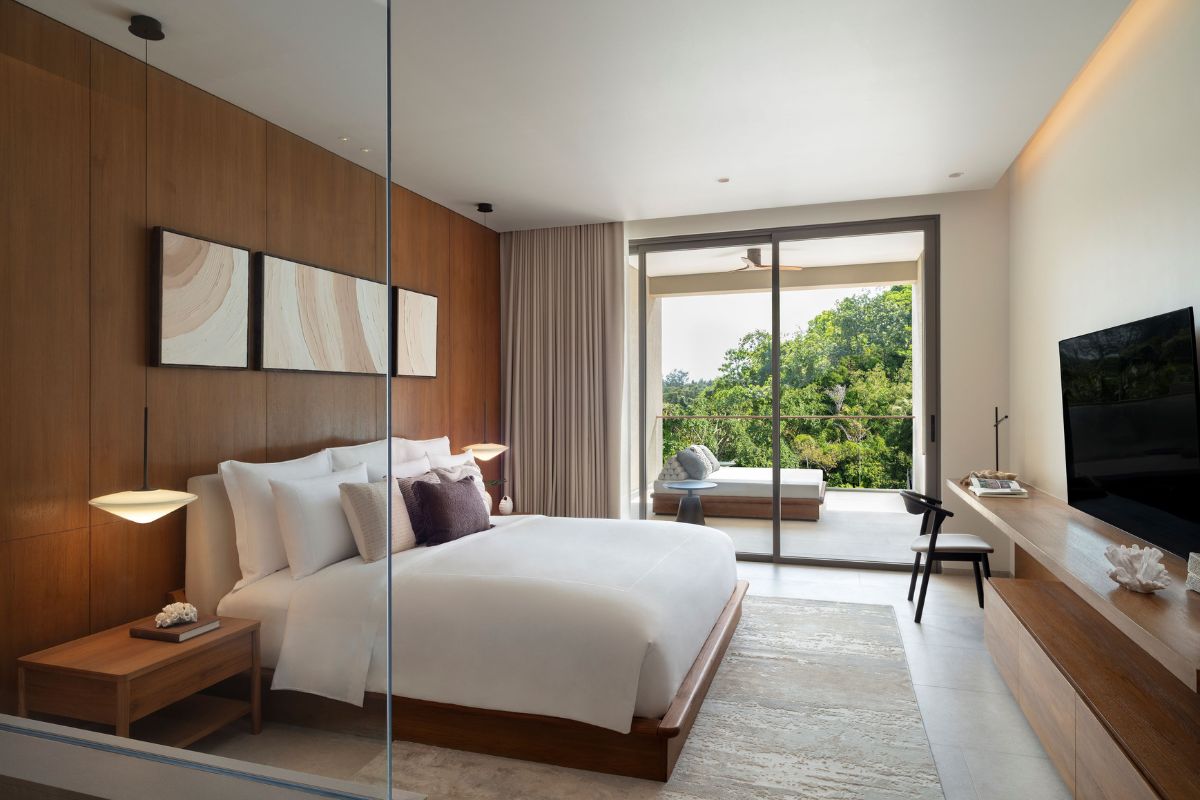
What the branded wave actually builds for Phuket
This is the part that outlasts any single launch, and it is the reason we think the trend is good for the island rather than merely good for the sellers.
It raises the floor on how things are built and run
Capstone Asset CEO Titiwat Kuvijitsuwan put it directly in the C9 release: brand standards, operating structures, service delivery and asset management now have to be built into a project from day one, and buyers are paying closer attention to what happens after handover, in comments carried by Hospitality Net. A developer who signs an international operator accepts an external standard for construction quality, maintenance reserves, staffing ratios and reporting. Those standards do not stay inside the gate. They set a benchmark that unbranded neighbours are measured against and eventually have to meet.
It creates skilled, year-round work
Branded residences are staffed like hotels: front of house, engineering, housekeeping, grounds, security, finance and asset management, running twelve months a year rather than through a high season. For an island where employment has historically followed the tourist calendar, a growing base of managed residential stock is a steadier source of skilled local careers, and a route into hospitality management rather than seasonal service.
It moves Phuket from volume to value
Phuket's international arrivals fell 5.38 percent in 2025 to 10.47 million, with tourism revenue down 4.49 percent, per Colliers Thailand. Yet the island's property market stayed among the country's strongest, and the top of it broke records. That is the clearest argument available for a value-led strategy. Residents and long-stay owners spend across the year, use schools, clinics, restaurants and marinas, and are far less exposed to a soft quarter of arrivals than a resort dependent on nightly rates.
It brings global distribution with it
The post-purchase offer has become part of the product. ThirdHome CEO Wade Shealy noted in the same release that a branded residence can now connect owners to a wider network of homes, destinations and private travel opportunities, as carried by TTR Weekly. In practice that plugs Phuket into international membership and exchange networks, introducing the island to high-spending travellers who arrive as guests of a network rather than through a search engine.
It attracts investment beyond the residential plot
Between 2021 and 2025 Phuket recorded 45,066 newly launched residential units with a total investment value of THB469.72 billion, and at the end of 2025 alone more than 72 projects representing over 10,312 units and THB81.64 billion, according to Colliers Thailand. Alongside that sits a wave of public and private megaprojects, including the ICONSIAM Phuket development, positioning the island as an economic hub for the Andaman region. Branded residential demand and destination infrastructure reinforce each other.
It is broadening the buyer base
Colliers records demand from Thai buyers alongside international purchasers from Russia, Australia, India, China and Kazakhstan. Some major developers sold out condominium and holiday home projects quickly, with others reaching 50 to 70 percent within a month of launch. A market drawing on several source countries at once is more resilient than one leaning on a single flow of capital, and branded product travels well because the name is already understood in every one of those markets.
Where the island needs to stay disciplined
A fair case includes the pressure points, and Houseviser sets them out clearly. Thailand grew 13.3 percent year on year while Asia grew 30.3 percent, so supply is expanding faster elsewhere. Vietnam leads the region by aggregate market value at roughly USD8 billion against Thailand's USD6.4 billion. And the reported figures count launched supply, meaning units brought to market, rather than sales, completions or resale performance.
Read constructively, the growth gap is not a warning so much as a description of a market that is past its land-grab phase. Slower new supply in your own market means less future competition for an existing owner. The genuine risks are narrower and more manageable: holiday home supply is heavily concentrated in Cherng Talay, which took over 58 percent of new units in 2025; beachfront scarcity is pushing development inland; and Colliers cautions that sustained high supply could sharpen price competition in the mid to upper-end condominium segment, advising developers to sharpen positioning, quality and pricing.
One data gap is worth naming honestly. As Houseviser notes, the published research does not establish branded versus unbranded occupancy, achieved rent, net yield after fees or resale spread for Phuket specifically, and the fees funding the service standard come out of the same rental income the yield is calculated from. That is a reason to check the management contract carefully, not a reason to avoid the segment.
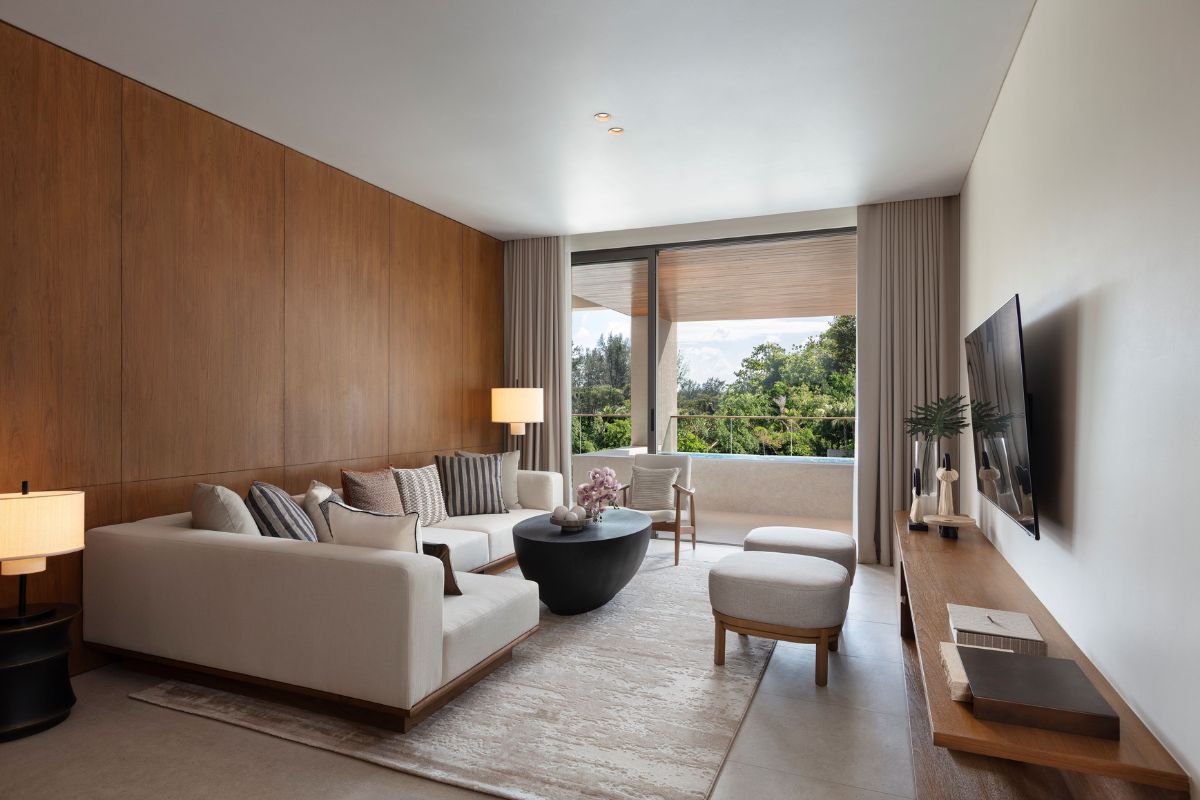
The trend line for Phuket through 2026
Colliers Thailand expects new condominium supply to moderate to 6,000 to 8,000 units in 2026, following a two-year surge of nearly 25,000, with Bang Tao, Cherng Talay, Rawai, Kata, Karon and Phuket Town remaining the key locations. In holiday homes, roughly 1,100 units launched across 40 projects in 2025 worth THB27.22 billion, and the THB30 to 50 million bracket remains the most active. Colliers also expects Phuket pricing to reach levels comparable with Bangkok and other leading international cities.
The national backdrop makes that more striking. CBRE Thailand data reported by Nation Thailand shows Bangkok's overall condominium market opening 2026 slowly, with only 12 new launches in the first quarter, while completed luxury projects held sales rates of 95 percent and super-luxury 86 percent. Buyers are being selective, and they are selecting quality. Knight Frank Thailand's outlook, reported by the Bangkok Post, points to Phuket property staying strong through 2026.
Moderating supply, firm demand at the top, scarce land and a deepening bench of international operators is a combination that favours well-chosen assets. It is not a market that will carry every project, and that is precisely why it is a good one for the island's reputation.
Where SEA Property fits into this
We have been selling Phuket property for more than 27 years from an office in Cherng Talay, the sub-district that absorbed over 58 percent of the island's new holiday home supply in 2025. We have watched this market move from villas sold on a handshake to branded residences underwritten to hotel standards, and we think the second version is better for everyone who lives here. SEA Property exists to help buyers, owners and developers get the most out of it.
In practice that means four things. We separate branded condominiums from genuine branded villas, so the comparables you use match the product you are buying. We pull management, licence and reserve costs out of the brochure and into a yield calculation you can check line by line. We compare branded and unbranded options in the same location, because on some budgets a well-run unbranded villa is still the better answer, and we will tell you when it is. And for owners and developers, we advise on positioning against the supply arriving through 2026 rather than against last year's market.
If you are weighing a branded residence in Bang Tao, Cherng Talay, Layan or Kamala, or deciding whether the premium suits your plans, talk to our team. We know these projects by name, by operator and by fee structure, and we would rather have that conversation before you sign than after handover.
Beyond Luxury. Beyond Ordinary.
Explore Curated Properties with us →
When it comes to luxury living, there’s only one name: SEA Property.
Tel & WhatsApp: +66 92 966 2236
Email: info@sea-property.com
Explore Common Questions About this Blog
1. Is Phuket really Asia's leading resort market for branded residences?
Yes, by unit count within the resort segment. Phuket holds 3,465 branded residence units and leads Asia's resort segment, per C9 Hotelworks. Thailand as a country also leads Asia by launched supply overall, with 13,124 units and 26 percent of the regional total, and leads the luxury tier with 30 projects. By aggregate market value, Vietnam leads the region at roughly USD8 billion.
2. Are Phuket's branded residences villas or condominiums?
Mostly condominiums. Condominiums make up 94 percent of Asia's branded residence supply, with landed property at 4 percent, according to the C9 review. Phuket's standalone branded segment is small and deliberately low-density at 678 units across eight projects, which reflects land scarcity and a preference for boutique scale rather than a shortage of demand.
3. What do branded residences cost in Phuket?
C9 puts the Phuket branded condominium average at THB197,745 per sqm, rising to THB212,113 in the Bang Tao and Kamala district. At the top of the market, Etro Residences Phuket achieved THB830,000 per sqm in January 2026, an island record. In the wider holiday home market, Colliers Thailand identifies THB30 to 50 million as the most active bracket.
4. How does the branded residence trend benefit Phuket itself?
It raises construction and service standards, because operators require them to be designed in from day one, as noted in the C9 release. It creates skilled year-round employment rather than seasonal work, brings global membership and travel networks to the island, and shifts Phuket toward value-led rather than volume-led visitation, which matters given arrivals softened 5.38 percent in 2025.
5. Is now a good time to buy a branded residence in Phuket?
The conditions are constructive but selective. Colliers expects new condominium supply to moderate to 6,000 to 8,000 units in 2026 after a two-year surge, while Knight Frank Thailand expects the market to stay strong. Before committing, check whether the rental programme is optional, whether reporting is top-line or bottom-line, whether income is pooled or individually allocated, and what the brand and management fees cost as a percentage of gross rent.


